
Can an AI Receptionist Handle Multiple Languages?

Yes, AI receptionists can handle calls in multiple languages, including Spanish, without making callers choose a language first. They can even switch languages during a call and send texts in the caller's preferred language. However, strong accents, regional dialects, and more complicated requests can still trip them up, so having a human available matters.
Key Takeaways
- AI receptionists typically cost less than hiring a bilingual employee.
- A bilingual receptionist can only handle one call at a time, while AI receptionists can handle multiple.
- AI can reduce the need to hire extra staff for multilingual call coverage.
- Spanish is the most useful second language for many US businesses.
- Test multilingual AI with local speakers before going live.
Can an AI Receptionist Handle Multiple Languages?
Yes, a multilingual AI receptionist can answer calls in different languages without callers having to select one from a menu. It can detect the language someone is speaking and continue the conversation in that language, whether they're asking about prices, booking an appointment, or checking business hours.
Some systems can also switch languages during a call and send booking confirmations or follow-up texts in the caller's language. If the AI struggles to understand someone or the request gets too complicated, it can transfer the call to a staff member.
How Does It Know Which Language to Speak?
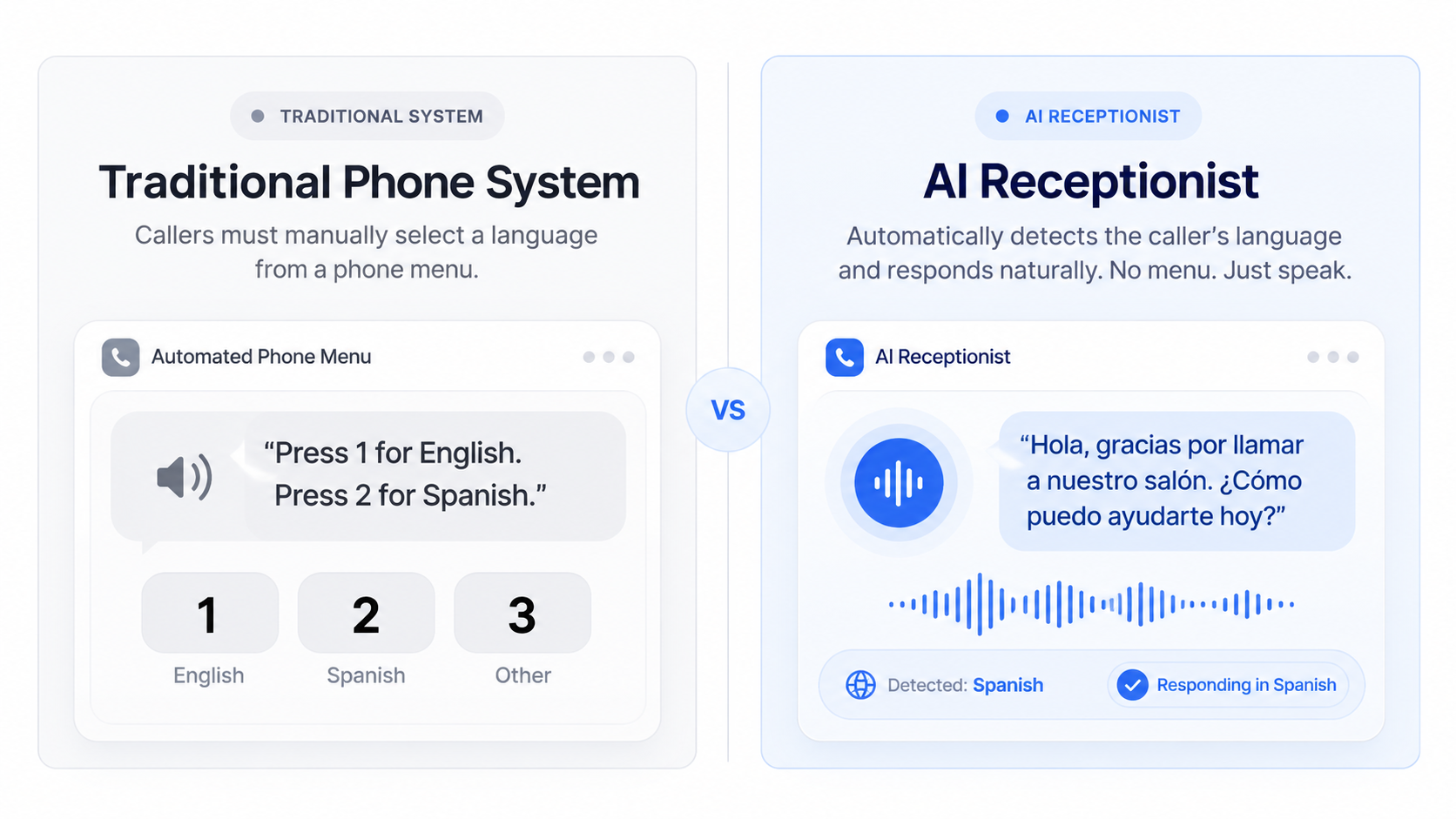
A multilingual AI receptionist can detect the caller's language from their first few words and respond in the same language. Callers don't have to choose a language or tell the AI what they prefer.
Older phone systems often make callers listen to a menu, such as "Press 1 for English, press 2 for Spanish." With automatic language detection, callers can simply start talking. The AI identifies the language and continues the conversation without sending them through a separate phone menu.
What a Bilingual Call Actually Sounds Like
Here's how a Spanish-speaking caller could book a salon appointment without waiting on hold or speaking to a staff member.
AI receptionist: "Hola, gracias por llamar a Bella Salon. ¿En qué puedo ayudarle?"
Caller: "Hola, quisiera reservar un corte de pelo para mañana."
AI receptionist: "Claro. Tenemos disponibilidad a las 11 de la mañana o a las 3 de la tarde."
Caller: "A las 3, por favor."
AI receptionist: "Perfecto. Su cita está confirmada para mañana a las 3."
The caller then receives a text confirmation in Spanish with the appointment details.
The whole exchange can take less than a minute, with no language menu, hold time, or transfer to another employee.
Which Languages Can It Handle?
Most multilingual AI receptionists support several languages, including Spanish, French, Mandarin, and Portuguese. For US local businesses, though, Spanish is often the priority.
According to the US Census Bureau, nearly 1 in 5 US residents, about 67.8 million people, speak a language other than English at home. Spanish accounts for roughly 62% of that group.
A thing to watch out for: A platform might advertise support for 30 or more languages, but that number alone doesn't tell you how well it handles real calls. A salon with mostly English and Spanish-speaking customers will get more value from reliable conversations in those two languages than from a long list of languages its customers rarely use.
Limits: Accents and Dialects
AI receptionists can speak multiple languages, but accents and regional dialects can still cause problems. A system that understands American English well might struggle with a strong British accent. Spanish can be even trickier, as pronunciation, vocabulary, and expressions vary between Mexican, Castilian, and Caribbean Spanish.
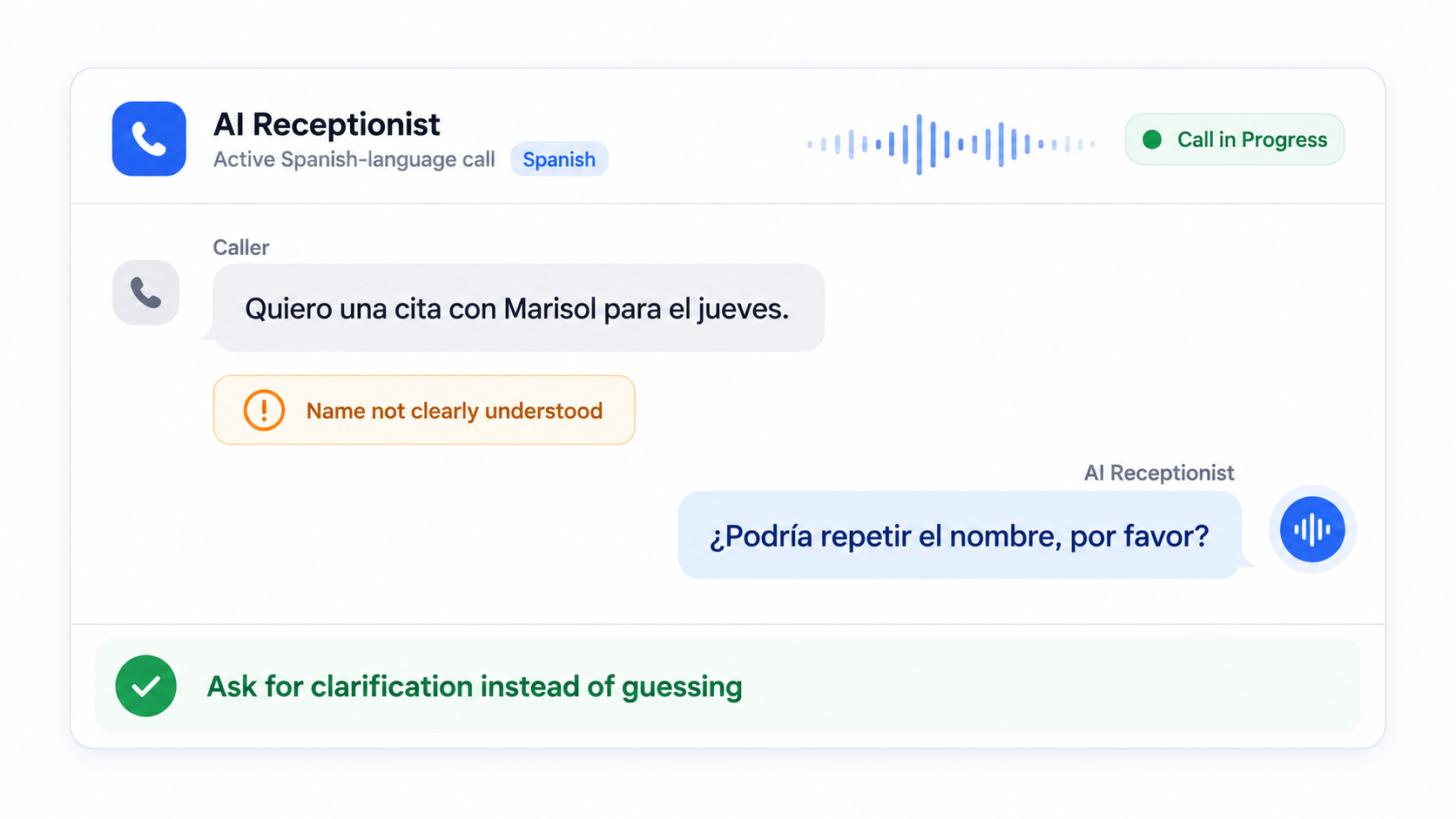
Weaker systems may mishear names, addresses, or appointment details, even when they support the caller's language.
Before going live, test the AI with native speakers from the communities your business serves. Have them ask questions, book appointments, and use everyday expressions. You'll get a much better idea of how well the AI handles your actual callers than you would from a language support list.
Can It Handle Several Languages at Once, and at Volume?
Yes, a multilingual AI receptionist can handle multiple calls at once, with each conversation taking place in the caller's language.
An AI receptionist can answer an English-speaking customer asking about prices while helping a Spanish-speaking customer book an appointment. Neither has to wait for the other call to end.
This is especially useful during busy hours, when several customers might call at the same time. The number of calls an AI can handle depends on the provider and plan, so it's worth checking for any limits on simultaneous calls.
Is It Better Than Hiring a Bilingual Receptionist?
For cost and availability, an AI receptionist is usually the better option. It can answer calls in several languages around the clock, while a bilingual employee typically covers one or two languages during their scheduled hours.
Hiring a bilingual receptionist also means paying a full-time salary, benefits, and other employment costs. An AI receptionist generally costs less. For example, 2025 median pay for receptionists is $38,010 per year, according to the U.S. Bureau of Labor Statistics.
Still, human receptionists have an advantage when conversations get complicated. A bilingual employee can better understand cultural nuances, calm an upset customer, or handle a sensitive complaint. For many businesses, the practical choice is to let AI handle routine multilingual calls and transfer difficult ones to a person.
When Does It Still Need a Human?
An AI receptionist should transfer calls to a person when the conversation becomes too complex, sensitive, or emotional, regardless of the language being spoken.
Some calls that need human support include:
- Complaints: A Spanish-speaking customer is upset about a poor salon experience.
- Billing disputes: A gym member questions an unexpected charge or requests a refund.
- Medical questions: A med spa client asks about side effects or whether a treatment is safe for them.
- Confusing requests: The AI struggles to understand a caller's accent or what they're asking for.
Why This Matters for Local Businesses
For local businesses, speaking a customer's language can affect whether they book or walk away. Research from RWS shows that people prefer buying from businesses that communicate in their own language.
Consider a salon or gym in a neighborhood with a large Spanish-speaking population. If someone calls to ask about prices or book an appointment and reaches an English-only voicemail, they may hang up and call another business.
A multilingual AI receptionist can handle both English and Spanish calls without making customers wait for a bilingual employee.
Frequently asked questions
- Can an AI receptionist handle multiple languages?
- Yes, a multilingual AI receptionist can detect a caller's language and respond in that language. Some systems can also switch languages during a call, book appointments, and send text confirmations in the caller's preferred language.
- Can an AI receptionist speak Spanish?
- Yes, many AI receptionists can speak and understand Spanish, including answering questions, scheduling appointments, and handling common customer requests. However, accuracy can vary with regional dialects and strong accents, so it's worth testing the system with Spanish speakers from your area.
- Will receptionist jobs be replaced by AI?
- AI is unlikely to replace receptionists entirely, but it can take over many routine tasks, such as answering FAQs, booking appointments, and handling calls during busy hours. Human receptionists are still needed for complaints, sensitive conversations, and situations that require personal judgment.
